MGBS2
28.5" scale baritone version of the single-cutaway MGS2, released 2020 for fans of low tunings.
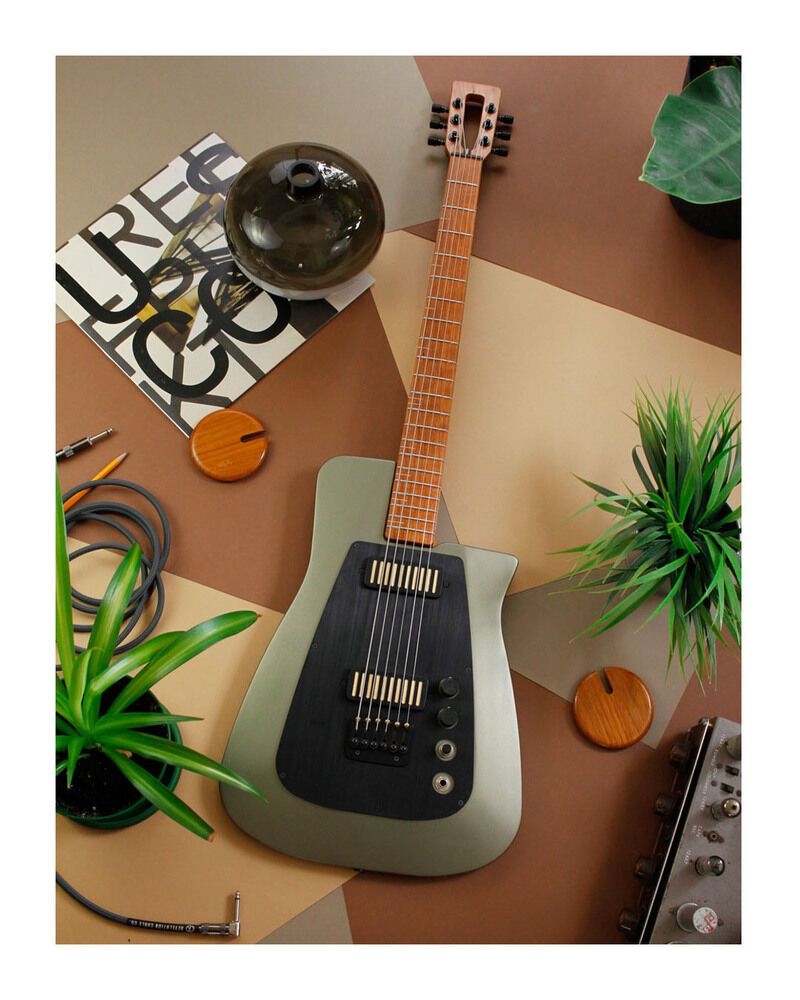
About this guitar
The MGBS2 takes the MGS2’s single-cutaway body and stretches it to a 28.5” baritone scale, three inches longer than its sibling, while keeping the same classic-leaning, minimalist silhouette. It gives low-tuning players a well-balanced instrument without straying from Millimetric’s design language. Construction follows the house formula: a bolt-on neck built to feel like a neck-through, in-house hardware and pickups, and a choice of Canadian wood species and eco-friendly finish.
Specs
| Scale Length | 28.5" (baritone) |
|---|---|
| Neck Construction | Bolt-on (aluminum-neck-inspired design, feels neck-through) |
| Body Shape | Single-cutaway (baritone version of MGS2) |
| Frets | 22, Jescar stainless steel, 2.54mm wide x 1.19mm tall |
| Fretboard Radius | 12" |
| Neck Profile | D to C shape with signature volute; choice of 1st/12th fret depth (19-20mm, 20-21mm, or 21-22mm) |
| Body/Neck Wood Options | Canadian-sourced Maple, Cherry, Walnut, Poplar, or Ash |
| Finish Options | Livos natural oil, water-based metallics, solid-colour milk paint |
| Bridge | Custom in-house, stainless steel and brass |
| Tuners | Hipshot open-gear locking tuners (USA), modified buttons |
| Hardware | Recessed strap buttons with Dunlop strap locks included |
| Truss Rod | Dual action |
| Pickup Options | MMSC, MMSCZ, MMFT, MMHB, MMGF, MMLS (in-house designs) |
| Currency | CAD |
Quick answers
- How much does the MGBS2 cost?
- Millimetric Instruments lists it at $4,550 (USD). Dealer and used prices vary.
- Is the MGBS2 still available?
- Yes. Millimetric Instruments lists it as a current model that's available to order.
- Who makes the MGBS2?
- Millimetric Instruments. Where it's built: Built by hand in Montréal, Quebec. It's listed here as a baritone guitar.
- How long is the wait for Millimetric Instruments gear?
- Custom orders start with an emailed order form and a non-refundable 50% deposit. Build time is generally 4 months, and the wait depends on the current workload.